



      |

.jpg)













WHAT IS IT ALL ABOUT ?
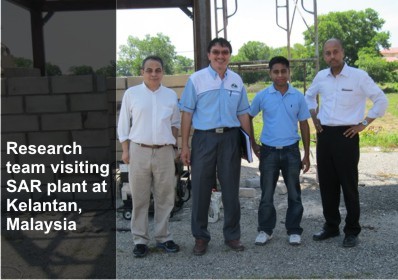
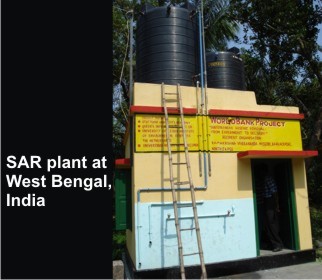
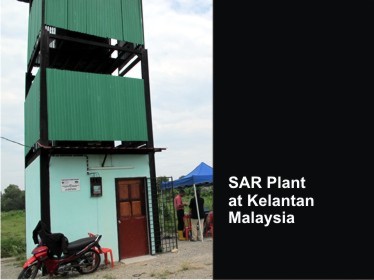
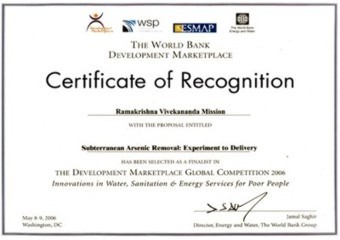
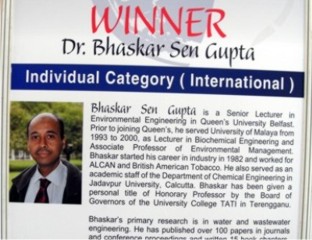
SAR Technology was developed by a consortium of European & Indian scientists led by Prof Bhaskar Sen Gupta, OBE & demonstrated at a location near Kolkata during 2005-06 (www.qub.ac.uk/tipot). The technology was subsequently replicated successfully in arsenic affected areas in West Bengal through World Bank Development Marketplace 2006 program. The technology involves a simple and easily adaptable process to remove arsenic from groundwater using controlled oxidation without using chemicals & production of sludge.
WORD OF CAUTION
Apparently, this technology is simple to operate. However, the underlying science is complex, as agreed by hydrogeologists, mineralogists, microbiologists and chemists. Uncalculated & unbalanced oxidation of the aquifer, without an expert's advice, can lead to As and Fe precipitation (resulting in As release in later date) rather than adsorption. Also, the abrupt change in redox potential may destroy the existing bacterial population, making the whole process unstable and ineffective. Although no harm will be caused to the aquifer, there won't be any benefit either.
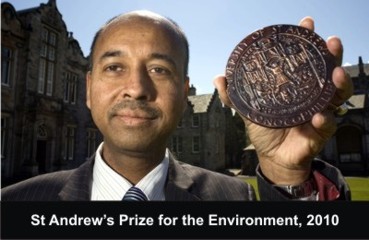
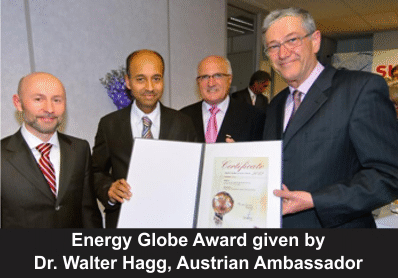
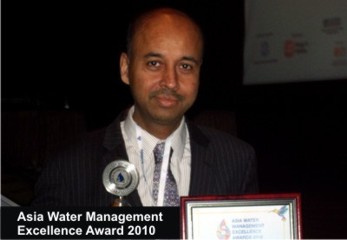
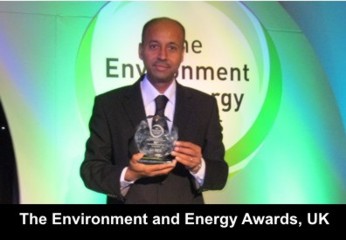
Congratulations to Dr. Bhaskar Sen Gupta for being awarded Officer of the Most Excellent Order of the British Empire (OBE) by Her Majesty the Queen in 2012 for his contributions to Higher Education & International Environmental Research.
ANY RISK ?
Is there any probability of aquifers being clogged ?
No. In SAR process aquifer will never get blocked. Precipitation and adsorption are competing processes. We perform a calculated start up process that ensures the aquifer is more of an adsorption bed rather than a precipitation bed. It can be controlled by controlling the redox potential drop across the zone of influence. Also, the iron-arsenic flocks are very minute in size & never aggregates to block soil pores.


GOOD TO KNOW
The scientists predict that long-term exposure to present arsenic concentrations around the world will result in approximately 1.2 million cases of hyperpigmentation, 6,00,000 cases of keratosis, 1,25,000 cases of skin cancer & 3,000 fatalities per year from internal cancers. (Massachusetts Institute of Technology, 2002)
Over 137 million people in more than 70 countries are probably affected by arsenic poisoning of drinking water
(Associated Press - Aug, 2007)
POTENTIAL
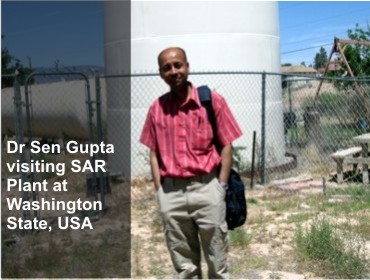
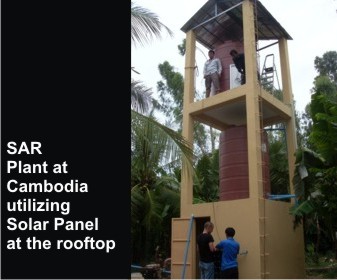
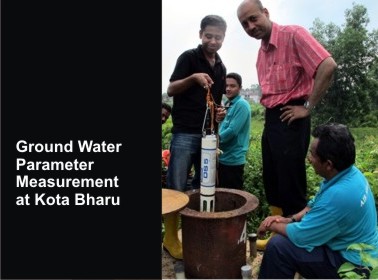
This technology can transform the way arsenic is removed from groundwater in Ganges, Brahmaputra and Mekong delta region in India, Bangladesh, Cambodia, Nepal, Vietnam and Thailand. Also USA and Mexico are the two areas where this technology can be useful. Further R&D is being carried out by Heriott-Watt University-UK, National Metallurgical Laboratory (CSIR)-India & University of Malaya-Malaysia.
Project Team


Thanks to:
Site owned by: Bhaskar Sengupta, Heriot-Watt University, Edinburgh


Designed by: Soumyadeep Mukhopadhyay


RELEVANCE
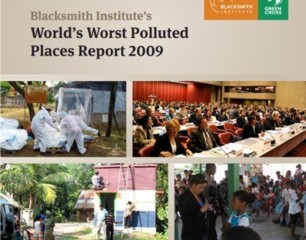
According to World Health Organisation (WHO), arsenic contamination in West Bengal & Bangladesh is the severest form of mass poisoning in the history of mankind. "By virtue of its sheer size it is pushing the limits of our knowledge and capacity to respond to it." (WHO, Friday 22 March 2002).
A vast area of the eastern part of river Ganges in West Bengal is affected due to arsenic contamination in ground water. 65 blocks, 15 non-municipal urban outgrowth, 9 municipal towns, 1312 villages and 3133 habitations spread over in 8 districts are affected so far. As per studies made in 2000, a minimum of 10 million people including about 2.5 million children belonging to 9 out of the total 18 districts of West Bengal were drinking arsenic contaminated ground water which contains arsenic more than 50 mg/L, much above the maximum limit set by WHO, which is 10 mg/L and about a 3 million people were already suffering from arsenic related diseases. About 40 million inhabitants of these 9 districts (Malda, Murshidabad, Nadia, North-24-Parganas, South-24-Parganas, Burdwan, Howrah, Hoogly and Kolkata) are at extreme risk from arsenic toxicity. According to the report of Public Health Engineering Dept. Government of West Bengal, up to 2001, no. of arsenic affected blocks is 75, moujas1 11, affected population 6.97 million, and no. of samples with arsenic level >0.05 mg/L is 12,423.

Free Web Counters